| ||||||||||||||||||||||
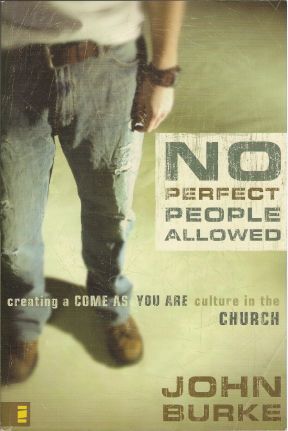 No Perfect People Allowed: Creating a Come as You are Culture in the Church
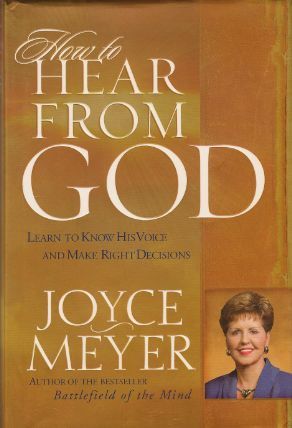 How to Hear from God
 |
 Blue Like Jazz
"The real issue in the Christian community was that it [love] was conditional. You were loved, but if you had questions... you were not so loved. You were loved in word, but there was, without question, a social commodity that was being withheld from you until you shaped up... There was love in Christian community, but it was conditional love. Sure, we called it unconditional, but it wasn't... And I hated this. I hated it with a passion. Everything in my soul told me it was wrong... I was tired of biblical ethic used as a tool with which to judge people rather than heal them... On the other hand, I felt by loving liberal people, I mean by really endorsing their existence, I was betraying the truth of God because I was encouraging them in their lives apart from God."
"What metaphors do we use when we think of relationships? We value people... We invest in people... Relationships could be bankrupt... People are priceless. All economic metaphor. I was taken aback. And that's when it hit me like so much epiphany getting dislodged from my arteries. The problem with Christian culture is we think of love as a commodity. We use it like money... This was the thing that had smelled so rotten all those years. I used love like money. The church used love like money. With love, we withheld affirmation from the people who did not agree with us, but we lavishly financed the ones who did."
"I became convicted about these things, so much so that I had some trouble getting to sleep. It was clear that I was to love everybody, be delighted at everybody's existence, and I had fallen miles short of God's aim... I repented. I told God I was sorry. I replaced economic metaphor, in my mind, with something different, a free gift metaphor or a magnet metaphor. That is, instead of withholding love to change somebody, I poured it on, lavishly. I hoped that love would work like a magnet, pulling people from the mire and toward healing. I knew this was the way God loved me. God had never withheld love to teach me a lesson..."
"If a person senses that you do not like them... then your religion and your political ideas will all seem wrong to them. If they sense that you like them, then they are open to what you have to say."
"After I repented, things were different... the difference was with me. I was happy. Before, I had all this negative tension flipping around in my gut, all this judgmentalism and pride and loathing of other people. I hated it, and now I was set free. I was free to love. I didn't have to discipline anybody, and I didn't have to judge anybody, I could treat everybody as though they were my best friend, as though they were rock stars or famous poets, as though they were amazing."
-- Donald Miller in "Blue Like Jazz", pp 214-220
Gary Wiens
 |
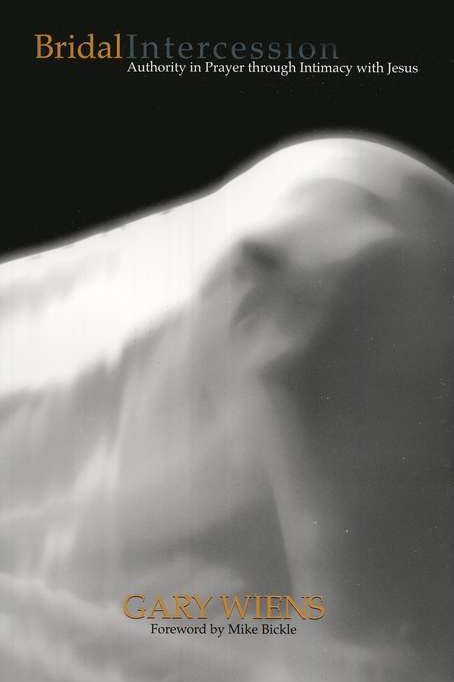 Bridal Intercession: Authority in Prayer through Intimacy with Jesus
"Since the focus of God's heart from the beginning of time has been preparing a Bride for His Son, He has always desired an intimate relationship with His people. And so He has spoken to us in various ways, with the consistent goal of engaging us in a dialogue about life in relationship with Him. This dialogue is called prayer, and its primary purpose is that we might come to know the heart of the One Who loves us and understands who we are and what we will become."
"He alone knows my true identity, and His words empower me to live in that identity. What could be more helpful, more healing than listening to Him? What could be more beneficial than speaking with Him in loving dialogue? Out of His heart of love, He draws us to the place of prayer, that He might communicate His intentions."
-- Gary Wiens in "Bridal Intercession: Authority in Prayer through Intimacy with Jesus", pp 14-15
J. Brent Bill
 |
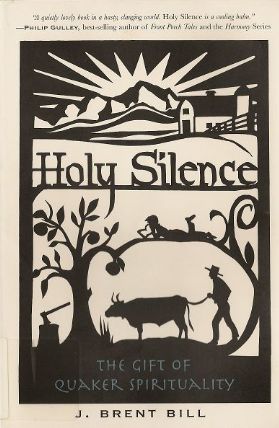 Holy Silence: The Gift of Quaker Spirituality
"When we really want to hear, and be heard by, someone we love, we do not go rushing into noisy crowds. Silence is a form of intimacy. That's how we experience it with our friends and lovers. As relationships grow deeper and more intimate, we spend more and more quiet time alone with our lover. We talk in low tones about the things that matter... That is why Christ comes to us when our hearts and minds are still and silent."
-- J. Brent Bill in "Holy Silence: The Gift of Quaker Spirituality", p 7
*******
"So how do you begin the practice of holding silence? One way to begin is to start by either sitting or lying down; whichever is more comfortable and appropriate... Then close your eyes and take a deep breath. Inhale and exhale slowly. Then do it even more slowly. It will seem forced at first... Feel your body gently rise and fall as you inhale and exhale."
"As you breathe, listen for the voice of the Spirit. Even listen for your own voice. What are you saying to you? What is God saying? Don't expect to hear or sense something immediately. This isn't something that happens after one or two breaths... Relax into silence."
"If you're having a hard time focusing on the silence, you might want to use a word or verse of Scripture or a prayer. Think about the various names given to Jesus -- Emmanuel, the Word, the Light, Prince of Peace, Morning Star, and the Good Shepherd. For many of us, the first steps we take into the world of silence are through the words of prayer. I used the Lord's Prayer..."
"[In your head and with your heart] you may want to sing, recite Scripture, remember something you've read, or call to mind some special spiritual words or phrases. All of these -- and any others you come up with -- are okay. Remember, Quakers have no rulebook. Use these as tools to help you focus on the eternal rather than the external."
"When you first begin practicing silence you might find it hard to stay focused. Your thoughts may wander. That's okay. The way of silence is not easy... Nothing worth doing seems to be achieved quickly... 'The mind wanders and the will falters again and again,' writes Thomas Green. '... But it is foolish to allow failures in concentration 'to plunge us into profitless self-condemnation'.... God is similarly pleased with our efforts and understanding of our many failures.' God will meet you in the effort. Don't get discouraged if your thoughts turn from the deep stuff of the Spirit to that ugly crack in the ceiling that you've been meaning to fix. Don't worry about it. The crack in the ceiling is part of your life, too. It is fine to be present where you are."
"When the crack, or other distractions, begin bothering you, bring yourself back to your breath. The more you practice, the easier it gets -- the more relaxed you become."
-- J. Brent Bill in "Holy Silence: The Gift of Quaker Spirituality", pp 80-83
Click for more quotes from J. Brent Bill
John Eldredge
 |
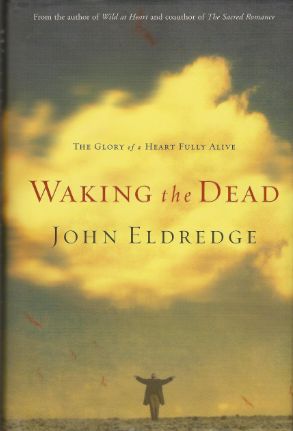 Waking the Dead
"To find God, you must look with all your heart. To remain present to God, you must remain present to your heart. To hear his voice, you must listen with all your heart. To love him, you must love with all your heart. You cannot be the person God meant you to be, and you cannot live the life he meant you to live, unless you live from the heart."
"[The Enemy's] plan from the beginning was to assault the heart... Make them so busy, they ignore the heart. Wound them so deeply, they don't want a heart. Twist their theology, so they despise the heart. Take away their courage. Destroy their creativity. Make intimacy with God impossible for them."
-- John Eldredge in "Waking the Dead", p 49, 51
*******
"The tabernacle itself was a picture of something... amazing. It is a kind of mythic symbol, given to us to help us understand a deeper eternal reality. Each person knows that now his body is the temple of God: 'Do you not know that your body is a temple of the Holy Spirit, who is in you, whom you have received from God?' (1 Cor. 6:19). Indeed it is. 'Don't you know that you yourselves are God's temple and that God's Spirit lives in you?' (1 Cor. 3:16). Okay -- each of us is now the temple of God. So where, then, is the Holy of Holies?"
"Your heart."
"That's right -- your heart. Paul teaches in Ephesians that 'Christ may dwell in your hearts through faith' (3:17). God comes down to dwell in us, in our hearts. Now, we know this: God cannot dwell where there is eveil. 'You are not a God who takes pleasure in evil; with you the wicked cannot dwell' (Ps. 5:4). Something pretty dramatic must have happened in our hearts, then, to make them fit to be the dwelling place of God."
"Of course, none of this can happen for us until we give our lives back to God. We cannot know the joy or the life or the freedom of heart I've described until we surrender our lives to Jesus and surrender them totally... We turn, and give ourselves body, soul, and spirit back to God, asking him to cleanse our hearts and make them new. And he does. He gives us a new heart. And he comes to dwell there, in our hearts."
-- John Eldredge in "Waking the Dead", p 68
Click for more quotes from John Eldredge
Brennan Manning
 |
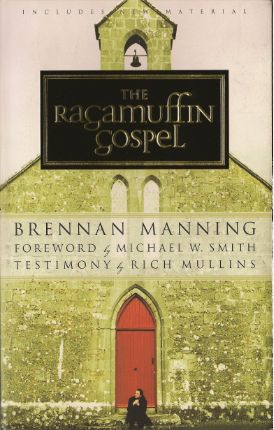 The Ragamuffin Gospel
"How difficult it is to be honest, to accept that I am unacceptable, to renounce self-justification, to give up the pretense that my prayers, spiritual insight, tithing, and successes in ministry have made me pleasing to God! No antecedent beauty enamors me in His eyes. I am lovable only because He loves me."
-- Brennan Manning in "The Ragamuffin Gospel", p 83, 2000
*******
"Do you really accept the message that God is head over heels in love with you? I believe that this question is at the core of our ability to mature and grow spiritually. If in our hearts we really don't believe that God loves us as we are, if we are still tainted by the lie that we can do something to make God love us more, we are rejecting the message of the cross."
-- Brennan Manning in "The Ragamuffin Gospel", p 159, 2000
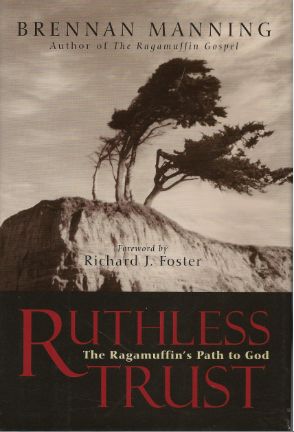 Ruthless Trust
"Ruthless trust is hanging tough in the dark nights, when we are plunged into desolation but know that the absence of God is only apparent."
-- Brennan Manning in "Ruthless Trust", p 170
*******
"Like faith and hope, trust cannot be self-generated. I cannot simply will myself to trust. What outrageous irony: the one thing that I am responsible for throughout my life I cannot generate. The only thing I need to do I cannot do..."
"What does lie within my power is paying attention to the faithfulness of Jesus. That's what I am asked to do; pay attention to Jesus throughout my journey, remembering his kindnesses (Ps. 103:2)."
-- Brennan Manning in "Ruthless Trust", pp 96-97
Mike Bickle
 |
 Passion for Jesus: Perfecting Extravagant Love for God
"We will never have more affection or passion for God than we understand He has for us. We will never be more committed to God than our understanding of His commitment to us."
-- Mike Bickle in "Passion for Jesus: Perfecting Extravagant Love for God", p. 98
*******
"I had been living under crushing condemnation, struggling under the painful misconception that God had judged me by my attainments and thus rejected me. Yet, while I had been focusing on my lack of mature attainment, God had been looking at my sincere intentions..."
"The Father-heart of God was... thrilled with me -- an immature, mess-making spiritual infant... My heavenly Father was enjoying me while I was yet in the process of maturing, not sighing in disgust and waiting impatiently until I grew up. He loved and longed for me; He felt proud and was excited over me while I was falling short."
-- Mike Bickle in "Passion for Jesus: Perfecting Extravagant Love for God", p. 42
Thomas R. Kelly
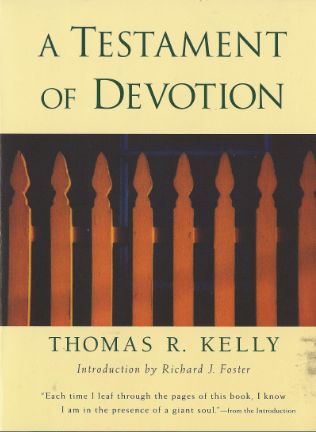 A Testament of Devotion
"Let me talk very intimately and very earnestly with you about Him who is dearer than life. Do your really want to live your lives, every moment of your lives, in His Presence? Do you long for Him, crave Him? Do you love His Presence? ...Have you set yourself to be His, and only His, walking every moment in holy obedience? We have too long been prim and restrained. The fires of the love of God, of our love toward God, and of His love toward us, are very hot. 'Thou shalt love the Lord thy God with all thy heart and soul and mind and strength.' Do we really do this? ...This life, this abiding, enduring peace that never fails, this serene power and unhurried conquest over the world, is meant to be ours."
-- Thomas R. Kelly in "A Testament of Devotion", pp 95-96
*******
"John Woolman... resolved to order his outward affairs as to be, at every moment, attentive to that voice. He simplified life on the basis of its relation to the divine Center. Nothing else really counted so much as attentiveness to that Root of all living which he found within himself."
-- Thomas R. Kelly in "A Testament of Devotion", p 93
*******
"Many of the things we are doing seem so important to us. We haven't been able to say No to them, because they seem so important. But if we center down, as the old phrase goes, and live in that holy Silence which is dearer than life, and take our life program into the silent places of the heart, with complete openness, ready to do, ready to renounce according to His leading, then many of the things we are doing lose their vitality for us."
-- Thomas R. Kelly in "A Testament of Devotion", p 95
*******
"When we say Yes or No to calls for service on the basis of heady [thinking] decisions, we have to give reasons, to ourselves and to others. But when we say Yes or No to call on the basis of inner guidance and whispered promptings of encouragement from the Center of our life, or on the basis of a lack of any inward 'rising' of the Life to encourage us in the call, we have no reason to give, except one -- the will of God as we discern it. Then we have begun to live in guidance."
-- Thomas R. Kelly in "A Testament of Devotion", pp 99-100
*******
"Life is meant to be lived from a Center, a divine Center. Each one of us can live such a life of amazing power and peace and serenity, of integration and confidence and simplified multiplicity, on one condition -- that is, if we really want to. There is a divine Abyss within us all, a holy Infinite Center, a Heart, a Life who speaks in us and through us to the world. We have all heard this holy Whisper at times. At times we have followed the Whisper, and amazing equilibrium of life, amazing effectiveness of living set in. But too many of us have heeded the Voice only at times."
-- Thomas R. Kelly in "A Testament of Devotion", p 93
Jeff Imbach
The River Within: Loving God, Living Passionately
"It seems to me that the affirmation of the storm in intimacy has been largely overlooked in our spirituality. This has produced tragic results. Life is sometimes stormy! If our spirituality rejects conflict as wrong, Christianity gets pitted against life and becomes a tyrant."
"Our spirituality isn't so much revealed by the storm as by the way we deal with it. When we believe that only tranquil relationships are evidence of spiritual maturity, we misinterpret passivity... as being spiritual... The test of authenticity comes in the way the passion is embraced and transformed."
"The storm will call us to affirm the current in our lives at times when it would be easier to give up. The storm will also call us... to let go of what seems so important to us and trust that the death and resurrection process will ensure that life will still come to us."
-- Jeff Imbach in "The River Within: Loving God, Living Passionately", p 232
Arthur W. Pink
Exposition of the Gospel of John
"Believers are never exhorted to be "in Christ" -- they are in Him... But Christians are frequently exhorted to abide in Christ, because this privilege and experience may be interrupted. 'To "abide", "continue", "dwell", "remain" in Christ -- by all these terms is this one word translated -- has always reference to the maintenance of fellowship with God in Christ. The word "abide" call us to vigilance, lest at any time the... realization of our union with Christ should be interrupted. To abide in Him, then, is to have a sustained conscious communion with Him' (Mr. Campbell). To abide in Christ signifies the constant occupation of the heart with Him -- a daily active faith in Him, which... maintains the dependency of the branch upon the vine, and the circulation of life and fatness of the vine in the branch...."
"To abide in Christ is to maintain a spirit and an attitude of dependency on Him. It is the consciousness of my helplessness; it is the realization that 'severed from him, I can do nothing'... There can be no abiding in Christ while we entertain a spirit of self-sufficiency. To have no confidence in the flesh, to renounce our own might, to lean not on our own understanding, precedes our turning unto Christ: there must be a recognition of my own emptiness before I shall turn to and draw from His fulness... In itself a branch has absolutely no resources: in union with the vine it is pervaded with life."
"To abide in Christ is to draw from His fulness... I must seek His presence; I must be occupied with His excellency; I must commune with Him. It is no longer a question of my sufficiency, my strength, or my anything. It is solely a matter of His sufficiency. The branch is simply a conduit through which flows the fruit-producing juices, which result in the lovely clusters of grapes."
-- Arthur W. Pink in "Exposition of the Gospel of John", pp 812 and 823, commenting upon John 15:1-6
A. W. Tozer
The Pursuit of God
"How tragic that we in this dark day have had our seeking done for us by our teachers. Everything is made to center upon the initial act of 'accepting' Christ (a term, incidentally, which is not found in the Bible) and we are not expected thereafter to crave any further revelation of God to our souls...
"In the midst of this chill there are some, I rejoice to acknowledge, who will not be content with shallow logic. They will admit the force of the argument, and then turn away with tears to hunt some lonely place and pray, 'O God show me Thy glory.' They want to taste, to touch with their hearts, to see with their inner eyes the wonder that is God.
"I want deliberately to encourage this mighty longing after God... Actual desire must be present or there will be no manifestation of Christ to His people. He waits to be wanted."
-- A. W. Tozer in "The Pursuit of God: A 31-Day Experience", pp 10-12
Henri Nouwen
Spiritual Direction: Wisdom for the Long Walk of Faith (written with Michael J. Christensen and Rebecca J. Laird)
"To pray unceasingly, as St. Paul asks us to do, would be completely impossible if it meant to think constantly about or speak continuously to God. To pray unceasingly does not mean to think about God in contrast to thinking about other things, or to talk to God instead of talking to other people. Rather, it means to think, speak, and live in the presence of God. Although it is important and even indispensable for the spiritual life to set apart time for God and God alone, prayer can only become unceasing prayer when all our thoughts -- beautiful or ugly, high or low, proud or shameful, sorrowful or joyful -- can be thought and expressed in the presence of God. Thus, converting our unceasing thinking into unceasing prayer moves us from a self-centered monologue to a God-centered dialogue. This requires that we turn all our thoughts into conversation. The main question, therefore, is not so much what we think, but to whom we present our thoughts."
-- Henri Nouwen (with Michael J. Christensen and Rebecca J. Laird) in "Spiritual Direction: Wisdom for the Long Walk of Faith", p 61, 2006
*******
"Intimate communion with God is not an easy discipline. Remember, Jesus spent the night in prayer. Night is a time of mystery, darkness, solitude, and sometimes loneliness... Prayer doesn't always offer an insight that suddenly comes to your mind. Communion with God is more often an intuition or inner conviction that God's heart is greater than your heart, God's mind is greater than your human mind, and God's light is so much greater than your light that it might blind you and make you feel like you're in the night..."
"In solitude, you come to know yourself as vulnerable and broken, yet beloved by God."
-- Henri Nouwen (with Michael J. Christensen and Rebecca J. Laird) in "Spiritual Direction: Wisdom for the Long Walk of Faith", p 112, 2006
*******
"If we do not know we are the beloved sons and daughters of God, we're going to expect someone [else]... to make us feel special and worthy... Many relationships begin out of a fear of being alone, but they can't ultimately satisfy a need that only solitude with God can fulfill."
-- Henri Nouwen (with Michael J. Christensen and Rebecca J. Laird) in "Spiritual Direction: Wisdom for the Long Walk of Faith", p 114, 2006
The Return of the Prodigal Son
"For most of my life I have struggled to find God, to know God, to love God. I have tried hard to follow the guidelines of the spiritual life -- pray always, work for others, read the Scriptures -- and to avoid the many temptations to dissipate myself. I have failed many times but always tried again, even when I was close to despair.
"Now I wonder whether I have sufficiently realized that during all this time God has been trying to find me, to know me, and to love me. The question is not 'How am I to find God?' but 'How am I to let myself be found by him?' ...The question is not 'How am I to love God?' but 'How am I to let myself be loved by God?'"
-- Henri Nouwen in "The Return of the Prodigal Son", pp 106, 1992
Mark and Patti Virkler
Communion with God
"If the Bible tells us anything from Genesis to Revelation, it tells us that God desires to actively communicate with His children, and that we should expect to hear His voice and see His vision as we walk through life. Before I found God, I lived out of myself. Now that I have found Him, I live out of His spoken word and vision within my heart. We do hear and see the Father doing (John 5:19, 20, 30). We see Jesus as a perfect example, modeling a way of living which we are to emulate."
-- Mark and Patti Virkler in "Communion with God", pp 32, 1983 (revised 1995).
Gary Smalley
I Promise You Forever
"When you look for the good and honorable in your mate, you will find it. God instilled His glory into each of us."
"Regardless of what we believe about someone, whether positive or negative, we will find evidence to support that belief... If you choose to see your mate as a wonderful treasure, you will focus on his or her positive behavior as evidence of high worth. Both the positive and negative are always there. Which you focus on is your choice."
"Choosing to notice your mate's positive behavior is what the Apostle Paul said to do: 'Finally, brethren, whatever is true, whatever is honorable, whatever is right, whatever is pure, whatever is lovely, whatever is of good repute, if there is anything worthy of praise, dwell on these things' (Philippians 4:8 NASB)." (p. 15, 17)
-- Gary Smalley in "I Promise You Forever", pp 15, 17
Click for more quotes from Gary Smalley
Saint Augustine
Confessions
"You have made us for yourself, O Lord, and our hearts are restless until they find their rest in you."
-- St. Augustine in "Confessions"
Jeanne Guyon
Experiencing the Depths of Jesus Christ
"The first thing you must learn, dear friend, is that 'the kingdom of God is within you.' (Luke 17:21) Never look for the kingdom anywhere but there, within... You need only believe that God dwells in you. This belief, and this belief alone, will bring you into His holy presence... Once you are in the Lord's presence, be still and quiet before Him... Never doubt your Lord's deep love for you. Never doubt His desire to hear you. Call on His name and remain before Him silently for a little while. Remain there, waiting to have His heart made known to you."
-- Jeanne Guyon in "Experiencing the Depths of Jesus Christ", pp 16-17
Francois Fenelon
Talking with God
"Talk with God with the thoughts of which your heart is full. If you enjoy the presence of God, if you feel drawn to love him, tell him so. Such sensible fervor will make the time of prayer fly without exhausting you, for all you will have to do is to pour forth from you abundance and say what you feel.
"But what, you ask, are you to do in times of dryness, inner resistance, and coldness? Do just the same thing. Say equally what is in your heart. Tell God that you no longer feel any love for him, that all is a terrible blank to you... Tell him all the evil you know about yourself...
"Say to him, 'O my God, behold my ingratitude, my inconstancy, my infidelity. Take my heart, for I do not know how to give it to you. Give me an inner distaste for external things; give me crosses necessary to bring me back under your yoke. Have mercy on me despite of myself!'
"In either of these two states I have described, tell him without hesitation everything that comes into your head, with the simplicity and familiarity of a little child sitting on its mother's knee."
-- Francois Fenelon in "Talking with God", pp 1-2, translated by Hal M. Helms, Paraclete Press, 1997.
*******
"We must... reserve the necessary time that we may seek God alone in prayer. Those who have positions of importance to fill usually have so many indispensable duties to perform, that without the greatest care in the management of time, there will be none left to be alone with God...
"We must be firm in observing our rules. This strictness seems excessive, but without it everything falls into confusion... We will become unconsciously drawn away from God, surrendering ourselves to all our pleasures."
-- Francois Fenelon in "Talking with God", pp 11, translated by Hal M. Helms, Paraclete Press, 1997.
|
|